"Play is the work of childhood." Jean Piaget said it, and decades of neuroscience have proved it. But in a culture increasingly obsessed with early academic achievement and structured activity schedules, the simple power of play is being quietly undervalued.
This matters — because what happens in play shapes the person a child will become.
The Brain During Play
When a child plays, their brain lights up across multiple regions simultaneously — something that doesn't happen during passive activities like watching TV. Play activates:
- The prefrontal cortex — involved in planning, decision-making, and impulse control
- The hippocampus — central to memory formation and learning
- The motor cortex — physical play builds neural pathways for coordination and spatial awareness
- The limbic system — emotional regulation and social bonding develop through interactive play
In short, play is a whole-brain workout. No flashcard, no app, no structured lesson activates the same breadth of neural activity as genuine, engaged play.
How Different Toys Shape Different Skills
Building and Construction Toys
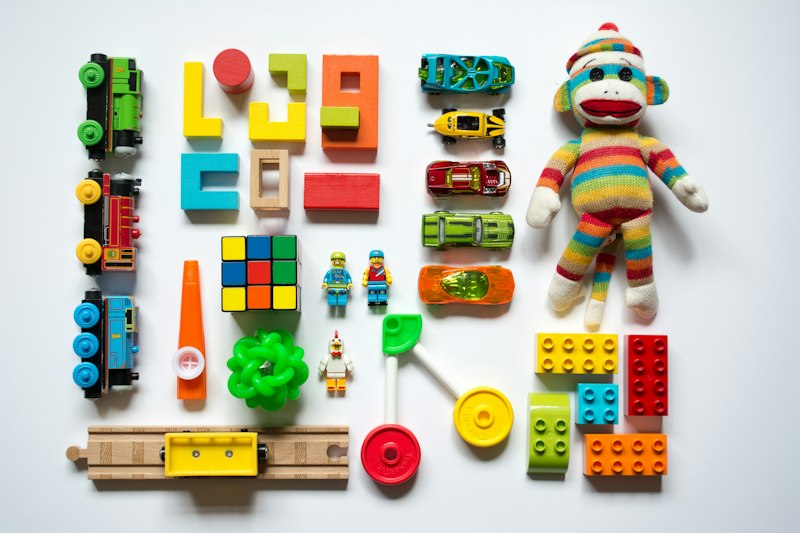
Blocks, LEGO, and construction sets develop spatial reasoning, engineering thinking, and mathematical intuition. Children who play extensively with building toys consistently score higher on spatial tasks and are more likely to pursue STEM fields.
Books
Reading is the single most powerful developmental activity available to children. It builds vocabulary, comprehension, empathy, and imagination simultaneously. A child who is read to for 20 minutes daily will have heard 1.8 million more words than a child who isn't by the time they start school.
Pretend Play Toys
Dolls, figurines, play kitchens, and dress-up materials build the social-emotional skills that underpin healthy relationships. Children process real experiences through pretend play — making it therapeutic as well as developmental.
Puzzles and Strategy Games
These build executive function — the suite of cognitive skills including planning, working memory, and cognitive flexibility that predict academic and life success more reliably than IQ scores.
The Danger of Toy Overload
More isn't better. Research from the University of Toledo found that toddlers who had fewer toys in a play environment actually played more creatively and for longer periods than those with many toys. Too many options create decision paralysis and shallow engagement.
The ideal toy environment is curated, not abundant — which is exactly the principle behind The Kids Era.
Play Is Not Optional
The United Nations Convention on the Rights of the Child explicitly recognizes play as a fundamental right of every child. It's not a luxury or a reward for finishing work. It is the work — the primary mechanism through which human beings grow into their full potential.
Protect your child's playtime. Fill it with quality books and toys. Step back and let the magic happen.