The phrase "educational toy" is everywhere — on packaging, in parenting blogs, in toy store aisles. But what actually makes a toy educational? And do educational toys really make a difference?
The answer, backed by decades of research in developmental psychology, is a resounding yes — when the right toys are matched to the right developmental stage.
What Makes a Toy "Educational"?
An educational toy actively engages a child's mind, encourages problem-solving, and supports the development of specific skills. A good educational toy:
- Has an appropriate challenge level — not too easy, not too frustrating
- Encourages active engagement rather than passive consumption
- Can be used in multiple ways as the child grows
- Promotes thinking, creativity, or physical coordination
Cognitive Development
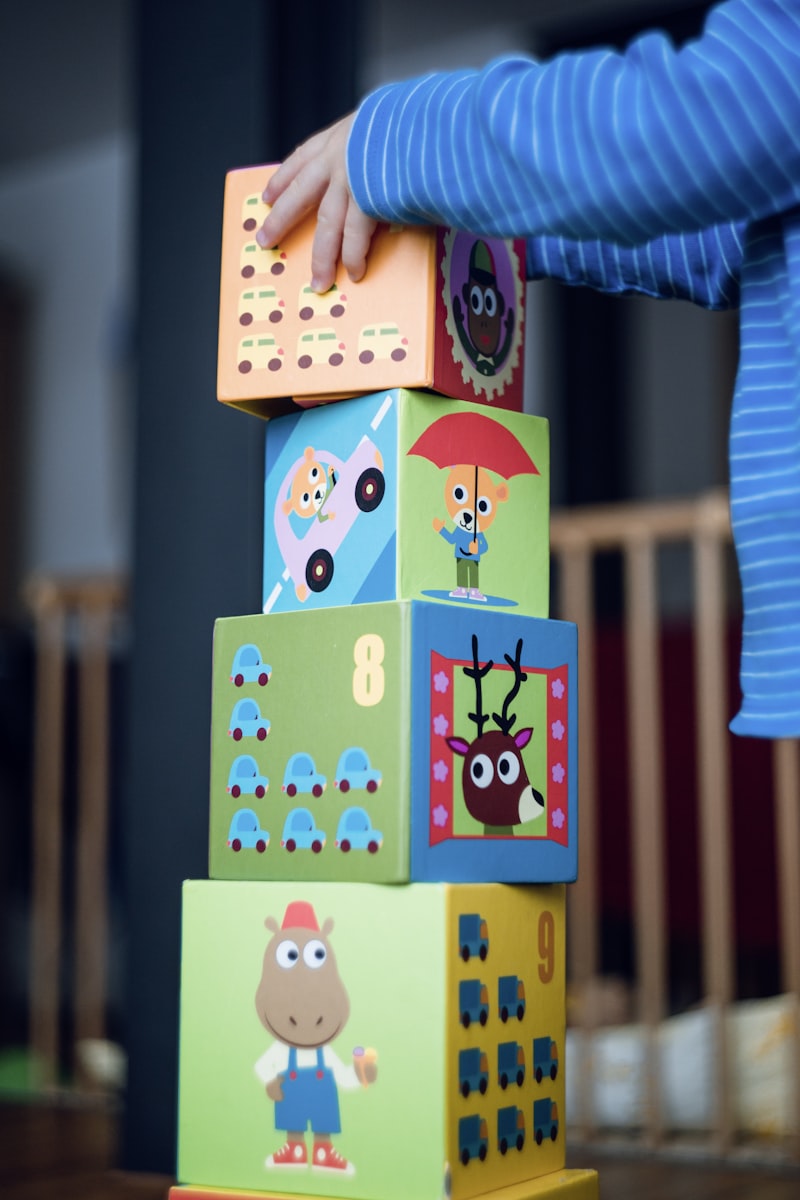
Toys that challenge thinking and reasoning directly support cognitive growth. Puzzles build spatial reasoning and problem-solving. Shape sorters teach categorization. Building sets develop understanding of structure, balance, and cause-and-effect. Mathematical foundations are built through counting toys, abacus sets, and pattern-making materials long before a child enters a formal classroom.
Fine and Gross Motor Development
Motor skills develop through use. Toys that require precise hand movements — threading beads, stacking rings, manipulating puzzle pieces — build the fine motor control that underpins handwriting, drawing, and self-care skills.
Language and Literacy Development
Books are the most powerful educational "toys" in existence. Reading aloud to children from birth is the single most impactful thing parents can do for language development. Beyond books, toys that encourage storytelling — puppets, dolls, pretend play sets — are language-rich environments where children naturally expand vocabulary and practice narrative structure.
Social-Emotional Development
Educational toys aren't only about academic skills. Toys that require cooperation, turn-taking, and shared problem-solving build the social-emotional intelligence that underpins success in relationships and workplaces for life. Board games teach rules, fairness, and handling both winning and losing gracefully.
Choosing Educational Toys: A Framework
- Follow your child's interests: The most educational toy is the one your child actually plays with.
- Choose open-ended over prescriptive: Toys with one right answer limit play; toys with infinite possibilities extend it.
- Prioritize quality materials: Well-made toys last longer and feel better in small hands.
- Mix categories: Ensure your child's environment includes books, building materials, art supplies, physical toys, and imaginative play props.
At The Kids Era, every book and toy in our catalogue is hand-picked by child development experts for age-appropriateness and educational value. We take the guesswork out of choosing, so you can focus on the playing.