Every parent has stood in a toy store — or scrolled through an online catalogue — feeling genuinely overwhelmed. There are thousands of options, all claiming to be educational, developmental, and exactly what your child needs. How do you choose?
The answer starts with understanding where your child is developmentally, not just chronologically. Age ratings on toys are a starting point, but your child's individual interests, abilities, and temperament should guide your final choices.
Why Age-Appropriateness Matters
A toy that's too simple bores a child. A toy that's too complex frustrates them. The "sweet spot" — a toy that challenges a child just beyond their current ability — creates the optimal state for learning and deep engagement. Beyond engagement, age-appropriate toys are also a safety issue: small parts safe for a 7-year-old can be hazardous for a toddler.
By Age Group
0–6 Months: Sensory Stimulation
- High-contrast black and white books and cards
- Soft, varied-texture toys for tactile exploration
- Gentle rattles and musical toys for auditory development
- Mobile or cot gym for visual tracking
6–12 Months: Cause and Effect
- Press-a-button, hear-a-sound toys
- Stacking cups (and knocking them down!)
- Simple board books with bold images
- Activity centers and play gyms
1–3 Years: Movement and Manipulation
- Push-along walkers and ride-on toys
- Shape sorters for problem-solving and fine motor skills
- Board books with simple stories and repetition
- Simple stacking and nesting toys
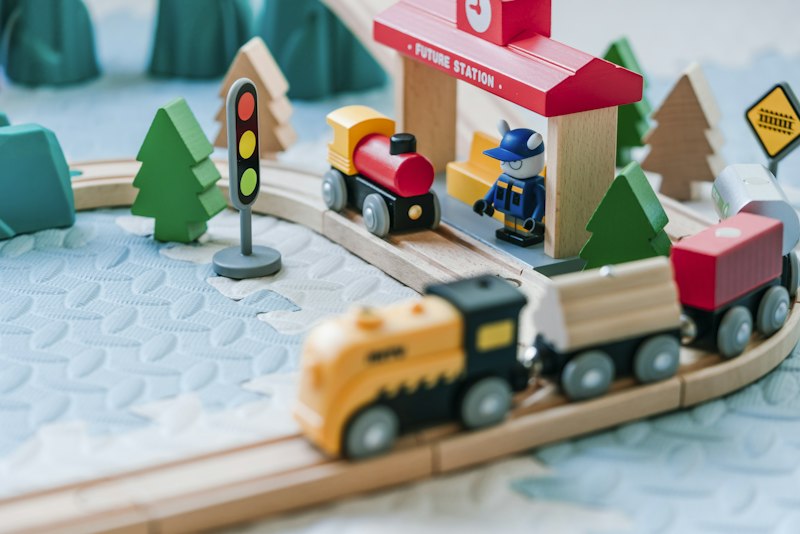
3–5 Years: Creative Construction
- Building sets (DUPLO, wooden blocks, magnetic tiles)
- Puzzles of increasing complexity (12–48 pieces)
- Dress-up costumes and props
- Board games with simple rules (Snakes & Ladders, memory games)
- Art supplies: watercolors, safety scissors, play dough
- Picture books with more complex storylines
5–8 Years: Strategy and Skill
- Strategy games (Junior Scrabble, Uno)
- Science and experiment kits
- Complex puzzles (100+ pieces)
- Early chapter books
- Construction sets with instructions
8–12 Years: Independence and Complexity
- STEM kits (robotics, electronics, coding games)
- Complex strategy games
- Young adult fiction and graphic novels
- Advanced art materials (watercolor sets, sketchbooks)
- Musical instruments
Beyond Age: What Else to Consider
- Your child's passions: A dinosaur-obsessed 4-year-old will engage more deeply with dinosaur-themed learning materials than generic options.
- Learning style: Some children love building; others prefer storytelling; others prefer movement. Honor your child's natural inclinations.
- Quality over quantity: Three well-chosen toys provide more developmental value than thirty mediocre ones.
The Kids Era takes the guesswork out of toy selection entirely. Our experts curate age-appropriate books and toys for every stage, delivered monthly to your door. You focus on the playing — we handle the choosing.